

23: Syzygy Live! from YorNight 2018
A very special live event from YorNight 2018, the University of York's celebration of research at beautiful King's Manor. We talked about exoplanets — that is, planets around other stars — and Emily shared her top three exoplanets of all time. Chris finished by strapping on a guitar and going all Chris Hadfield with The Exoplanet Song. A wonderful, enthusiastic audience of young and old (many in astro-themed fancy dress for the occasion!) packed out the theatre, asked brilliant questions and cheered along.

22: How To Measure The Universe
We've been so comfortable throwing around facts like "the Sun is 8 light seconds away" and "the nearest star is 4 light years away", it's easy to forget that measuring cosmic distances isn't as simple as pulling out a tape measure. So how *do* you measure how far it is to the moon, or the next star, or a distant galaxy? Emily gives us her top five rungs on the Cosmic Distance Ladder.

21: BepiColombo goes to Mercury
Mercury: closest planet to the Sun, a small, uninteresting lump of rock ... or, an enigma, with a strange tidally-locked orbit, a core that's way too big, and a mysterious origin story that astronomers are slowly piecing together. Which is why it's Emily's favourite planet, and why ESA and JAXA are sending the fabulously-named BepiColombo spacecraft to take a closer look.

20: Photo of a Black Hole
At the centre of the Milky Way Galaxy lies a super-massive black hole. We know it's there, we can detect its effects on the galaxy and see nearby stars whipping around it at high speed. Last year, a worldwide collaboration of astronomers decided to try to take the first direct image of the black hole, merging telescopes spread across the planet into the equivalent of one giant radio dish. Did they succeed? We're still waiting on that image ...

19: Moons, Exomoons & Moonmoons
The Kepler mission found loads of exoplanets, and now astronomers are digging deeper into the data in the search for exo*moons* around those planets. All of which sends Chris and Emily on a deep dive into the detail of definitions: what's a moon, anyway? Do we know what a planet is? Or a star? Do astronomers actually understand anything at all?!

18: Mysterious Planet 9
We're back from our summer hiatus with an appropriately Hallowe'eny story about a goblin. Or rather, The Goblin, a tiny lump of rock far out in the Solar System that might just point to the existence of the long-sought, mysterious Planet 9 ...

17: Quantum Conspiracy Theory
Summer holidays are over, though Emily is still running around overseas enjoying the astronomer lifestyle. So Chris shares a story that tickled him this week, about a bunch of physicists and astronomers who showed that if quantum theory is just a cosmic magic trick played on researchers, that trick had to have been set up before the earth was even formed.
Episode 16: Einstein at the Heart of the Galaxy
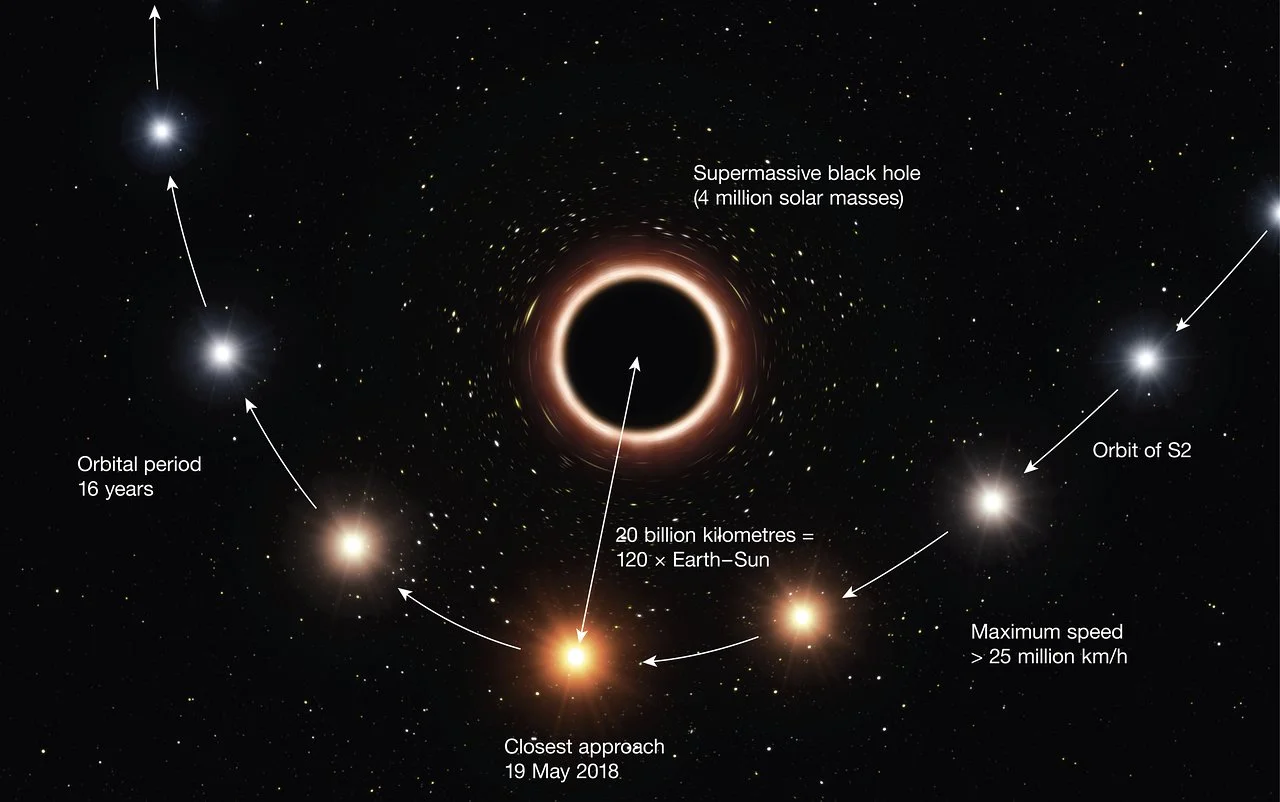
There’s a monster deep in the heart of the Milky Way Galaxy. Even though we can’t see it, we know it’s there ... because it has to be.
Over two decades, astronomers have pointed very large telescopes, including The Very Large Telescope, toward the galactic centre. They’ve been tracking the motions of a bunch of stars right at the core — ordinary stars doing something extraordinary. They’re moving fast, very very fast, in orbit around something very massive. But when astronomers look to find what’s at the centre of these stars’ orbits ... there’s nothing there.
The only real possibility is that they are orbiting a super-massive black hole.
At their fastest, some of the stars are moving at a few percent of the speed of light, which is fast enough to put Einstein’s theory of relativity to the test.

Episode 15: A Salty Lake on Mars
Stop me if you've heard this one before: astronomers announced in July that they'd found water on Mars.
No, seriously. I know they've said something that sounds like that before, but this is different — this is *liquid* water. Probably.
See, previously they'd found solid ice, and then found evidence for liquid water billions of years in the past, and then signs that sometimes a little bit of water runs across the surface in the Martian summer before evaporating away. But *this* time, astronomers reckon they've spotted a lake of briny water down under the surface. Which is exciting — so, could it mean life?! Hmmmm.
Episode 14: Total Eclipse of the Moon
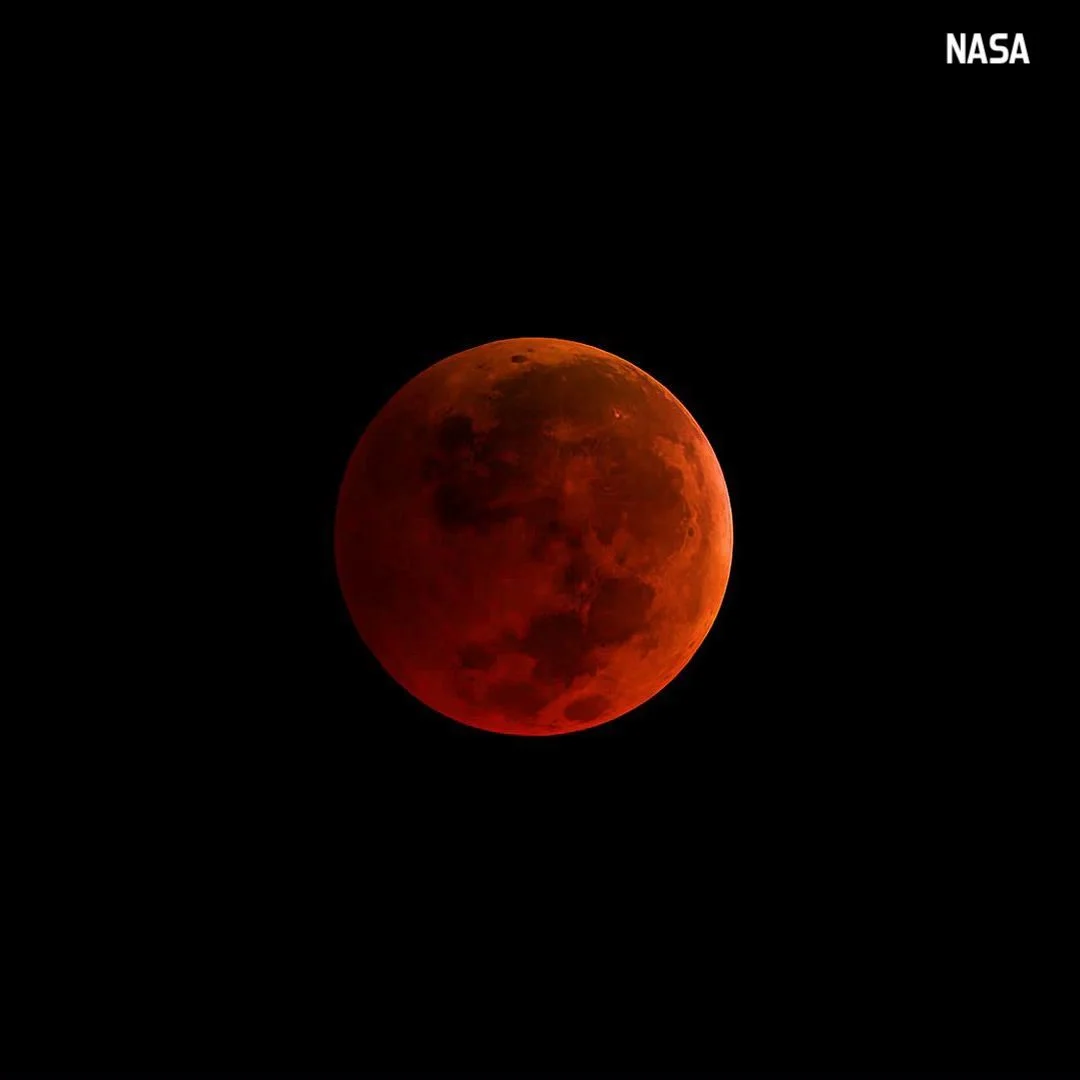
Around 9pm (local UK time) on Friday 27 July 2018, the full moon will rise over the horizon. But this full moon will be a bit special: it’ll be a deep red colour, because we’re going to experience a total lunar eclipse! C’mon people, get outside!
A lunar eclipse is where the Moon passes through the Earth’s shadow. That means the Moon, the Earth and the Sun are aligned. We have a word for that: it’s totally going to be a syzygy!
So to celebrate, we’re chatting about the eclipse — what it will look like, when to watch it, where the redness comes from — as well as getting a bit lost in tangents along the way, as we do, about astrology, the end of the world, Betteridge’s Law of Headlines and cosmic sows.