

63: A Pair Of Delta Scuti Lambda Boos
Weirdest episode title ever! From her lockdown bunker in Preston, Emily joins Chris for a special social-distanced episode, talking about a weird binary system found in the TESS data recently. One of the stars is pulsating, but only on one side — which doesn’t happen very often. In fact, this is a first for astronomy, which is always exciting. The star may be close to overloading its Roche lobe, which doesn’t sound good at all. And of course, we’re almost through our run of Super Moons for 2020, with a Pink Moon in April and a Flower Moon in May, so naturally Emily has been on the radio again …
62: The Cosmic Sponge
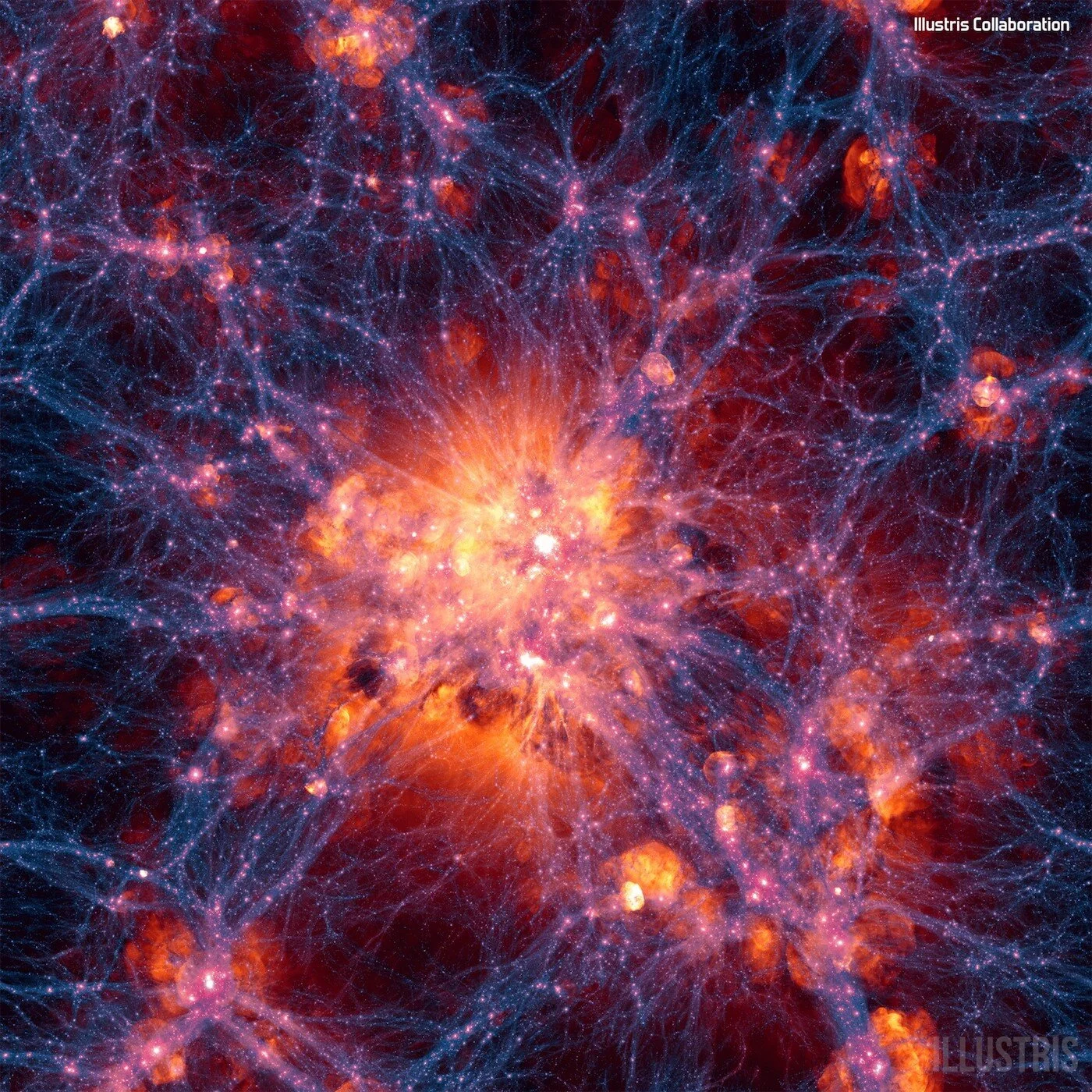
Space is big, as Douglas Adams so succinctly put it. But how big? And what does the Universe look like when you see it at those scales. The structure of the large-scale cosmos is amazing — beyond galaxies, beyond clusters of galaxies, we're talking super-mega-ludicrous clusters. Clusters of clusters. Madness. In the last 20 years two advances have given us a glimpse of the Universe at these largest scales: surveys of galaxies that map out the cosmos in fine detail, and stupendously complex simulations on powerful supercomputers. At the heart of it all, responsible for the intriguing filaments and walls and voids — the cosmic sponge itself — we find an old, mysterious, dark friend.

61: Biggest Bang Eva!
Astronomers have spotted a void, a cavity, a big hole in the intergalactic stuff in a cluster of galaxies far away. And this thing is big. Very big — fifteen Milky Way Galaxies across. The void was created by a stupendously energetic jet erupting from a Super Massive Black Hole in the centre of one of the galaxies, and when they did the maths, the researchers realised they were looking at the aftermath of the biggest explosion since ... well, since the Big Bang itself!

60: Big Moons!
Super Snow Moon. Super Worm Moon. Super Pink Moon. Super Flower Moon. We're tripping over the Super Moons this year, there's so many lying around all over the place. Why so many? And what is a Super Moon anyway? Does it matter? What even is a month? Does that matter either? And — most importantly — is the moon bigger near the horizon? Emily's here with all the answers.
59: Living With A Star
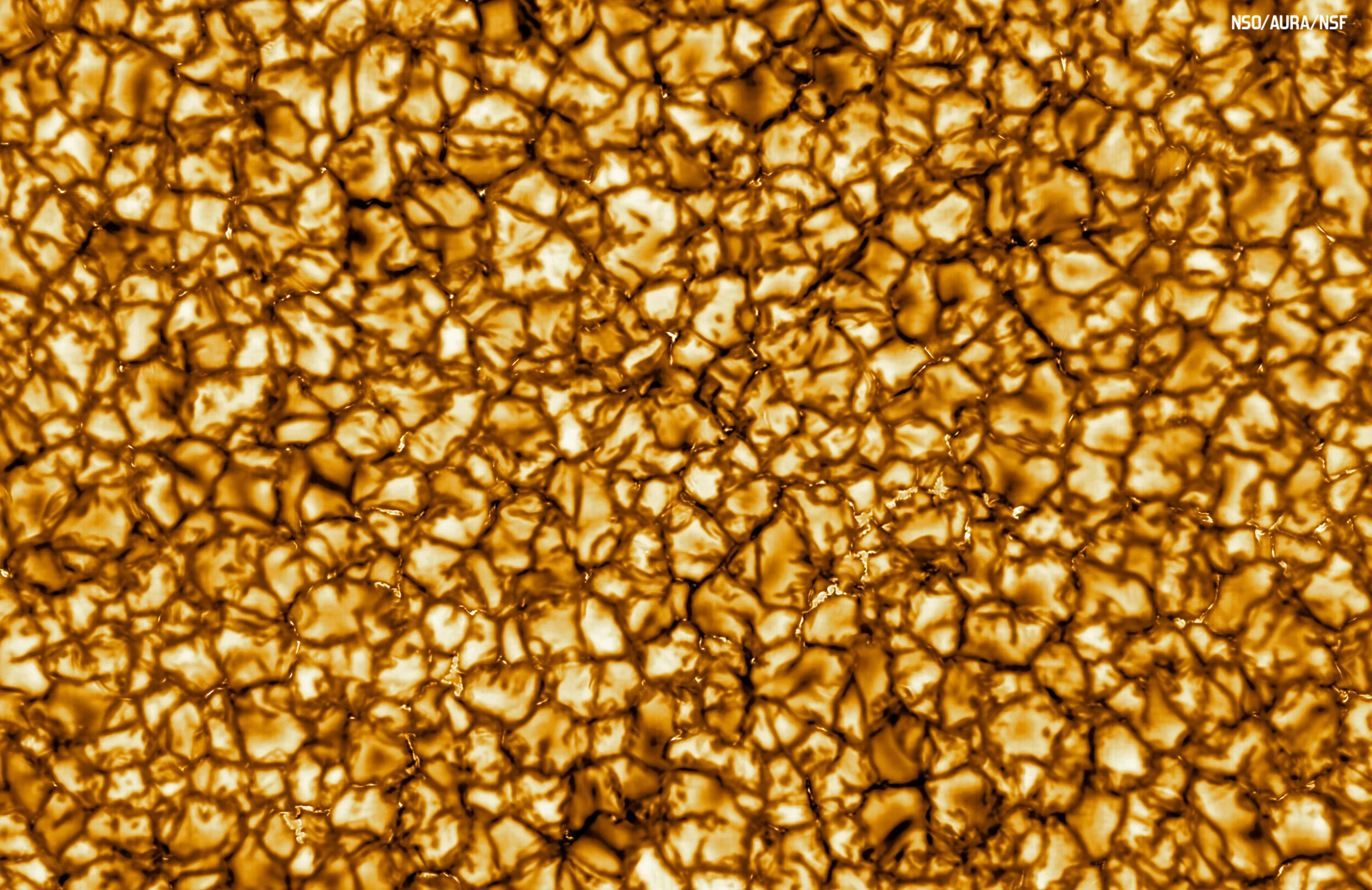
The Sun — so close, we can almost touch it. (Don't, that would be bad.) Yet astronomers have so much to learn about our nearest star. Just a few weeks ago, the ESA Solar Orbiter launched, off on a mission to orbit the sun (hence the name) and catch a good look at the Sun's poles for the first time. It joins the Parker Solar Probe, which is lining up to take some deep dives nice and close to the Sun. And to top it all off, the world's largest ground-based solar observatory, the Daniel K. Inouye Telescope, just took some a-maz-ing images of the Sun's surface.

58: Astronomical Pancake Theory
For Pancake Day (mmmmm, pancakes) we celebrate all the pancake-y things in the Universe, from Saturn's rings to planetary systems, from spiral galaxies to black hole accretion discs. It's no coincidence flat, round, spinny things are common in the cosmos — it's physics, innit!

57: Ancient Stardust and Gaia Sausage
In 1969, a chunk of space rock blasted through the skies above Victoria, Australia, before making in a small, smoking crater near the town of Murchison. Keen-eyed locals grabbed as many bits of the Murchison Meteorite as they could, and it has been an object of great scientific interest ever since. Even now, 50 years later, we're still finding surprises inside — like a couple of dozen tiny grains of dust, more ancient than the entire solar system. A suggested topic from a listener (hi, mum!).

56: No Bang For Betelgeuse?
"Is Betelgeuse About To Explode?" — Forbes. "Is Betelgeuse On The Brink Of A Supernova?" — Washington Post. "Fading star heading for explosive end?" — The Guardian. Betelgeuse, the astoundingly big red star in Orion's armpit, is indeed acting weirdly, but astrophysics and Betteridge's Law both suggest the answer to the headline questions is "probably not today, no".